Korean Bibimbap
Highlighted under: Authentic Kitchen
Experience the vibrant flavors and colorful presentation of Korean Bibimbap, a mixed rice dish that brings together fresh vegetables, savory meats, and a spicy kick.
Korean Bibimbap is not just a meal; it's a culinary experience that combines various textures and flavors in one bowl. Traditionally served in a hot stone pot, this dish is as visually appealing as it is delicious.
Why You Will Love This Recipe
- A beautiful presentation with vibrant colors
- Customizable with your favorite proteins and vegetables
- A delightful mix of flavors and textures in every bite
The Origins of Bibimbap
Bibimbap, a traditional Korean dish, translates to 'mixed rice.' This colorful meal has roots in the Joseon Dynasty, where it was often served as a royal dish. The combination of rice, vegetables, and proteins not only offers a satisfying meal but also reflects the harmony of flavors and textures that Korean cuisine is known for. Each ingredient in bibimbap represents a different season, making it a dish that changes with the availability of fresh produce.
Originally, bibimbap was made with leftover ingredients, showcasing the Korean philosophy of minimizing waste while maximizing flavor. The dish gained immense popularity for its versatility, allowing cooks to incorporate whatever vegetables or meats they had on hand. Today, bibimbap is enjoyed worldwide, celebrated for its nutritional balance and eye-catching presentation.
Customizing Your Bibimbap
One of the best aspects of bibimbap is its incredible versatility. You can easily customize the recipe to suit your personal tastes or dietary needs. Swap out ground beef for tofu or tempeh for a vegetarian option, or try adding kimchi for a spicy kick. Seasonal vegetables like radishes or bell peppers can also be included, allowing you to enjoy a different flavor profile each time you make it.
For those who love spice, consider adding extra gochujang or even chili flakes to elevate the heat. Alternatively, if you prefer milder flavors, a touch of sweet soy sauce can bring a delightful balance to the dish. The beauty of bibimbap lies in its adaptability; there are no strict rules, so feel free to experiment and create a personal version that suits your palate.
Health Benefits of Bibimbap
Korean bibimbap is not only delicious but also packed with health benefits. The dish is rich in essential nutrients, thanks to the variety of vegetables used. Spinach offers iron and vitamins A and C, while carrots provide beta-carotene and antioxidants. The combination of protein from the meat or tofu and the carbohydrates from the rice creates a balanced meal that keeps you energized throughout the day.
Additionally, the use of sesame oil and seeds adds healthy fats, which are important for heart health. The inclusion of fermented ingredients like kimchi can also support gut health due to their probiotic content. Enjoying bibimbap can be a great way to incorporate a wide array of nutrients into your diet while savoring the delicious flavors of Korean cuisine.
Ingredients
For the Bibimbap
- 2 cups cooked rice
- 1 cup spinach, blanched
- 1 cup bean sprouts, blanched
- 1 cup carrots, julienned
- 1 cup zucchini, julienned
- 1 cup shiitake mushrooms, sliced
- 4 eggs
- 1 pound ground beef or chicken
- 2 tablespoons gochujang (Korean chili paste)
- 2 tablespoons soy sauce
- 1 tablespoon sesame oil
- Sesame seeds for garnish
- Green onions, chopped for garnish
Feel free to adjust the ingredients according to your taste preferences!
Instructions
Prepare the Rice
Cook the rice according to package instructions. Keep warm while preparing the other ingredients.
Cook the Beef/Chicken
In a skillet over medium heat, add ground beef or chicken. Cook until browned, then add soy sauce, sesame oil, and gochujang. Stir well and cook for an additional 5 minutes.
Sauté Vegetables
In the same skillet, add a little more sesame oil and sauté the zucchini, carrots, and mushrooms until tender. Season with salt and pepper to taste.
Fry the Eggs
In a separate pan, fry the eggs sunny-side-up until the whites are set but the yolks remain runny.
Assemble the Bibimbap
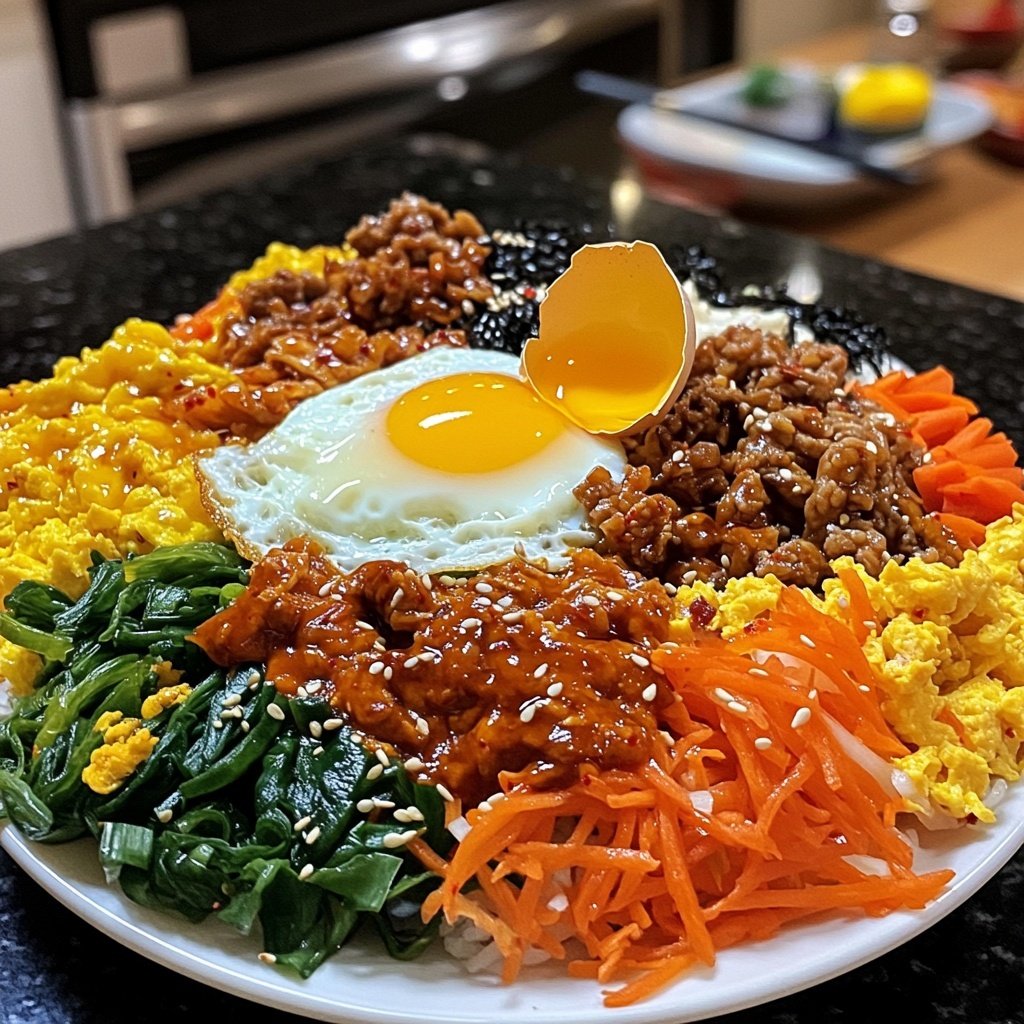
In bowls, layer the cooked rice, sautéed vegetables, blanched spinach, bean sprouts, and ground meat. Top each bowl with a fried egg, a drizzle of sesame oil, and garnish with sesame seeds and green onions.
Serve
Serve hot and mix all the ingredients together before eating. Enjoy your homemade Korean Bibimbap!
Mix well and enjoy the explosion of flavors!
Pro Tips
- Feel free to add other vegetables like radishes or cucumbers for added crunch.
Tips for Perfect Bibimbap
To achieve the perfect bibimbap, it’s essential to cook each ingredient separately. This technique not only enhances the flavors but also ensures that each component retains its unique texture. For a more authentic experience, consider using short-grain rice, which is stickier and holds together well, making it easier to mix with other ingredients.
Blanching the vegetables, such as spinach and bean sprouts, helps preserve their vibrant colors and crispness. Be sure to season the vegetables lightly to allow their natural flavors to shine through. Lastly, don’t skip the fried egg on top; it adds creaminess and richness that elevates the entire dish.
Serving Suggestions
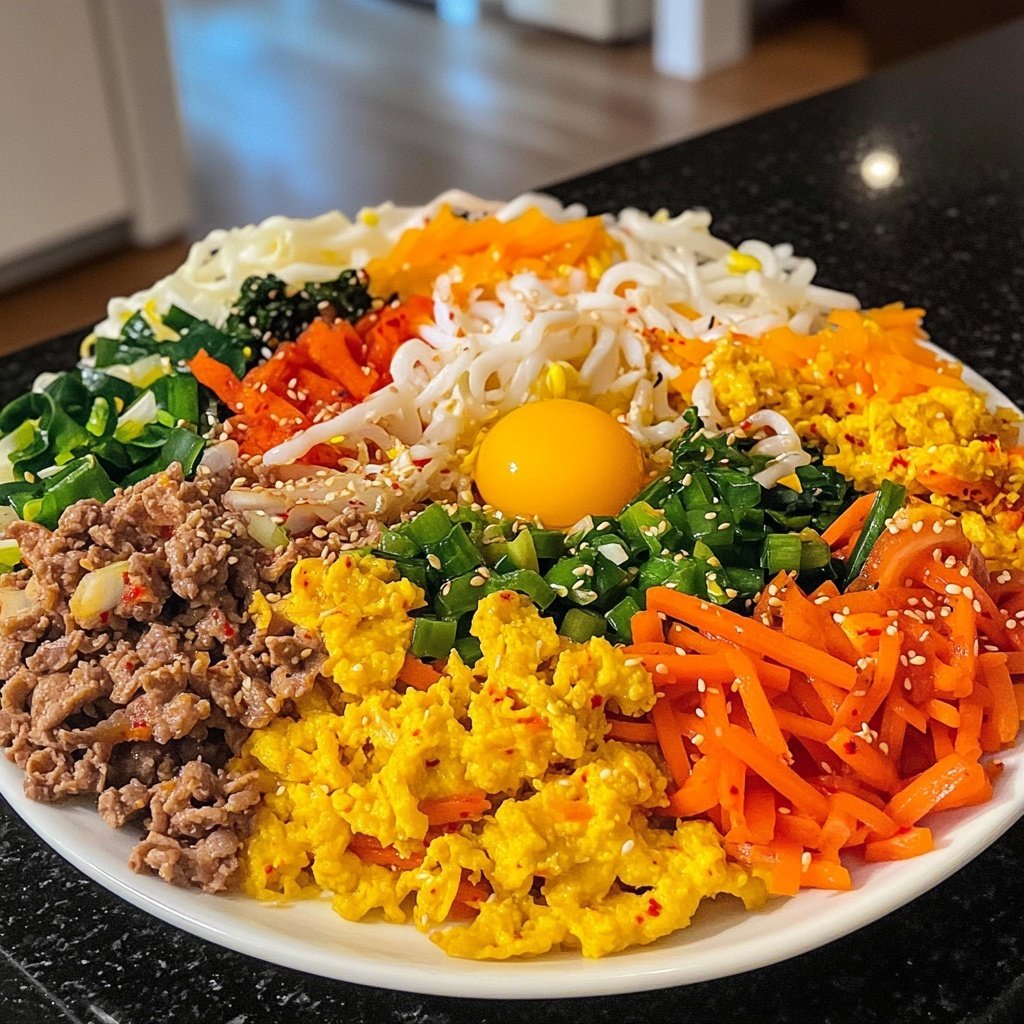
When serving bibimbap, presentation is key. Use a large, shallow bowl to showcase the vibrant colors of the ingredients. Arrange the rice at the bottom, then artfully place the vegetables and meat around the edge, leaving the center open for the fried egg. This not only looks appealing but also makes it easy for diners to mix their own bowl, creating a delightful experience.
For an added touch, serve bibimbap with a side of kimchi or pickled vegetables. These accompaniments provide additional flavor and texture, making for a more complete meal. You can also offer additional gochujang on the side for those who want to customize the spice level further.
Questions About Recipes
→ Can I make Bibimbap vegetarian?
Absolutely! Just skip the meat and add more vegetables or tofu.
→ What can I substitute for gochujang?
You can use sriracha or chili paste, but the flavor will differ slightly.
→ Is Bibimbap served hot?
Yes, traditionally, Bibimbap is served in a hot stone pot for a crispy rice bottom.
→ Can I prepare the ingredients in advance?
Yes, you can prepare the vegetables and meat ahead of time and store them in the fridge.
Korean Bibimbap
Created by: Bethan Rowcroft
Recipe Type: Authentic Kitchen
Skill Level: Intermediate
Final Quantity: 4 servings
What You'll Need
For the Bibimbap
- 2 cups cooked rice
- 1 cup spinach, blanched
- 1 cup bean sprouts, blanched
- 1 cup carrots, julienned
- 1 cup zucchini, julienned
- 1 cup shiitake mushrooms, sliced
- 4 eggs
- 1 pound ground beef or chicken
- 2 tablespoons gochujang (Korean chili paste)
- 2 tablespoons soy sauce
- 1 tablespoon sesame oil
- Sesame seeds for garnish
- Green onions, chopped for garnish
How-To Steps
Cook the rice according to package instructions. Keep warm while preparing the other ingredients.
In a skillet over medium heat, add ground beef or chicken. Cook until browned, then add soy sauce, sesame oil, and gochujang. Stir well and cook for an additional 5 minutes.
In the same skillet, add a little more sesame oil and sauté the zucchini, carrots, and mushrooms until tender. Season with salt and pepper to taste.
In a separate pan, fry the eggs sunny-side-up until the whites are set but the yolks remain runny.
In bowls, layer the cooked rice, sautéed vegetables, blanched spinach, bean sprouts, and ground meat. Top each bowl with a fried egg, a drizzle of sesame oil, and garnish with sesame seeds and green onions.
Serve hot and mix all the ingredients together before eating. Enjoy your homemade Korean Bibimbap!
Extra Tips
- Feel free to add other vegetables like radishes or cucumbers for added crunch.
Nutritional Breakdown (Per Serving)
- Calories: 500 kcal
- Total Fat: 20g
- Saturated Fat: 5g
- Cholesterol: 200mg
- Sodium: 600mg
- Total Carbohydrates: 60g
- Dietary Fiber: 5g
- Sugars: 4g
- Protein: 25g